15 November 2026
Why Centralized Visibility is Key to Multi-Market Customer Acquisition
Presented by @growthsignal
Understanding the Challenge of Multi-Market Growth
Expanding a business into multiple markets sounds straightforward: find new locations, adapt your offer, and start generating leads. In practice, it is one of the hardest things a company can do well. Each market has its own demand patterns, competitive landscape, and customer expectations. Without a clear view of what is happening across all those fronts, efforts become scattered, budgets erode, and opportunities slip away.
The core problem is fragmentation. When you run campaigns in several cities or regions, data piles up in separate accounts, spreadsheets, and dashboards. A marketing manager in one location may not know what worked in another. A sales team might chase leads that have already been contacted by a different office. The result is duplication, missed handoffs, and a poor experience for potential customers who see inconsistent messaging.
What Centralized Visibility Means
Centralized visibility means having a single source of truth for every activity across all your markets. It is not just about collecting data in one place; it is about structuring that data so you can compare performance, spot trends, and act quickly. For a business running customer acquisition campaigns in three, ten, or fifty locations, this visibility changes how decisions are made.
Instead of logging into separate tools for each market, you see a unified view. You can see which channels are driving leads in each region, how those leads are progressing through your funnel, and where you are spending the most money per customer. This level of clarity lets you shift resources toward what is working and pull back from what is not, without guesswork.
How It Works in Practice
Centralized visibility starts with the right infrastructure. You need a system that can ingest data from every customer acquisition channel you use: paid ads, organic search, social media, email, events, and referrals. That system must normalize the data so a lead from a Facebook ad in one city is comparable to a lead from a Google search in another.
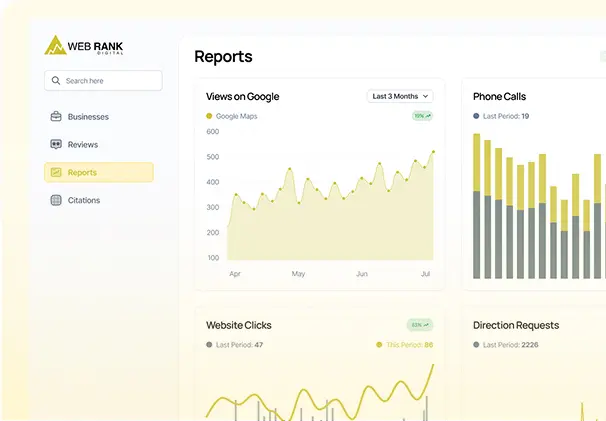
Once the data is in one place, you can build dashboards that show key metrics per market. Things like cost per lead, conversion rate, lead response time, and revenue per customer become comparable across locations. You can set up automated alerts when a market underperforms or when a sudden spike in demand appears.
This setup also enables scalable workflows. Instead of manually copying campaign settings from one market to another, you can create templates that apply consistent rules while respecting local differences. For example, you might use the same ad creative but change the headline to match regional language or seasonal events. The system handles the repetition; you handle the nuance.
The Role of Market Intelligence
Centralized visibility is even more powerful when it incorporates market intelligence. Knowing what your competitors are doing in each location gives you context for your own performance. If your cost per lead jumps in a specific market, it could be because a competitor launched a new campaign, not because your offer is weak. With centralized data, you can spot that pattern and adjust your strategy accordingly.
Competitor analysis, when fed into a unified view, helps you prioritize markets. You might see that a region with low competition and high demand is underserved. That insight becomes an action plan: increase spend there, tailor your messaging, and capture share before others catch on. Without visibility, you might miss that opportunity entirely.
Why Consistency Matters
One of the hidden costs of multi-market expansion is inconsistency. Customers who interact with your brand in different ways across locations can become confused or skeptical. A lead that starts with a strong ad in one market but receives a generic follow-up from a different team feels the disconnect. Centralized reporting helps you enforce campaign consistency without losing local relevance.
You can define brand guidelines, messaging frameworks, and lead handling rules at the central level, then let each local team execute within those boundaries. The system tracks whether each market follows the playbook. If a market deviates too far, you see it in the data and can intervene early.
This balance between central control and local flexibility is hard to strike without a clear view of what everyone is doing. Centralized visibility gives you that balance. You do not have to choose between chaos and rigidity; you can have both structure and adaptability.
What It Means for Your Business
For a company serious about growing across multiple markets, centralized visibility is not a nice-to-have; it is the foundation of scalable customer acquisition. Without it, you are flying blind, making decisions based on incomplete or outdated information. With it, you can move fast, allocate budget confidently, and ensure every lead gets the right treatment no matter where it comes from.

Platforms like webrankdigital.com are built to provide this kind of visibility. They combine market intelligence, competitor analysis, automated funnels, and lead tracking into a single interface. For businesses that operate across cities or regions, this means less time spent stitching together reports and more time acting on insights.
Adopting a centralized approach also changes how you think about growth. Instead of treating each market as a separate experiment, you see them as parts of a connected system. Success in one market informs decisions in another. Failures become learning opportunities rather than sunk costs. Your team becomes more efficient because they stop reinventing the wheel for each location.
Practical Steps to Get Started
Moving toward centralized visibility does not require a complete overhaul of everything you do. Start by auditing your current data sources. List every platform where you run campaigns, track leads, or manage customer relationships. Identify gaps where data is siloed or where manual entry creates errors.
Next, choose a central hub that can connect to those sources. Many businesses use a CRM or a customer acquisition platform that offers integration with ad networks, email tools, and analytics. The key is to pick something that can handle the volume and variety of data you have today, plus what you expect as you add more markets.
Define the metrics that matter most to your business. For some companies, it is cost per qualified lead. For others, it is lifetime value or time to close. Whatever you choose, make sure every market reports the same metrics in the same way. This consistency is what makes comparison useful.
Finally, build a routine for reviewing the centralized data. Set a weekly or monthly cadence where you look at performance across markets. Ask questions: Which market has the highest conversion rate? Which one has the lowest cost per lead? What can we learn from the top performer and apply elsewhere? Over time, this habit turns data into a competitive advantage.
Common Pitfalls to Avoid
Centralized visibility is powerful, but only if you use it correctly. One common mistake is trying to centralize everything at once. Start with the most critical data: lead sources, conversion rates, and spend. Add layers like customer feedback or competitor intelligence as you get comfortable.
Another pitfall is ignoring local context. A low conversion rate in a new market might be normal while you build brand awareness. Do not force every market to match a single benchmark. Use the centralized view to understand why numbers differ, not to demand uniformity.
Finally, avoid creating a bottleneck. Centralized visibility should empower local teams, not slow them down. Give them access to the data they need and let them make decisions within agreed parameters. The goal is alignment, not control.
For a deeper dive into how these principles apply to your specific situation, exploring a platform like webrankdigital.com can give you a concrete sense of what centralized visibility looks like in action. Their approach to market intelligence and automated funnels is designed to solve exactly the kind of fragmentation that multi-market businesses face.
Centralized visibility is not a magic fix. It takes effort to set up and discipline to maintain. But for any business that wants to grow across multiple markets without losing efficiency or focus, it is the single most important investment you can make. It turns chaos into clarity, and that clarity is what makes scalable customer acquisition possible.